73 MINS READ
Solo Female Travel Vietnam: Your Complete 2026 Guide
Post by Sophie Chen
Disclosure: This post may contain affiliate links, which means I earn a small commission at no extra cost to you if you book through my links. I only recommend services I've personally used and trust. Read More
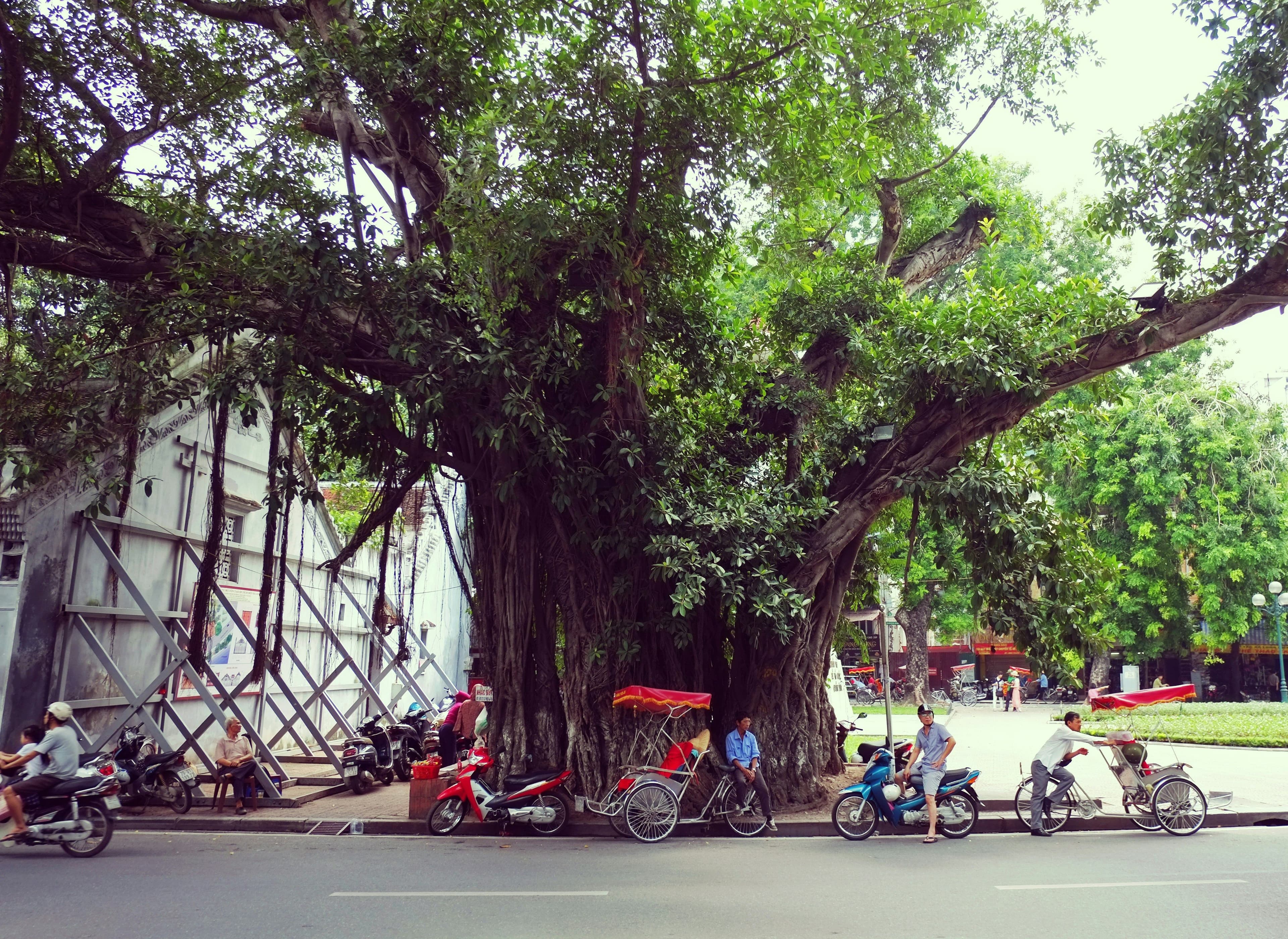
I'll never forget my first attempt to cross the street in Hanoi's Old Quarter. I stood on the curb for a full ten minutes, watching an endless river of motorbikes swarm past like schools of fish. There were no gaps. No pauses. No traffic lights for blocks. I watched other people simply step into the chaos and somehow emerge unscathed on the other side, and I thought, "I've made a terrible mistake coming here."
That was Day One in Vietnam. By Day Three, I was confidently weaving through traffic like a local. By Week Three, I'd eaten my weight in banh mi, haggled at markets, survived multiple overnight buses, and fallen completely in love with this wild, beautiful, challenging country.
Solo female travel in Vietnam is different from Thailand. It's rawer, more chaotic, more challenging—and honestly, more rewarding. Where Thailand holds your hand, Vietnam pushes you into the deep end and makes you learn to swim. But here's what I discovered across three months and eight Vietnamese cities: Vietnam rewards brave travelers in ways that easy destinations never can.
This guide contains everything I wish I'd known before arriving: honest talk about the challenges (the language barrier is REAL, the traffic is intense, some vendors are aggressive), practical solutions that actually work, real budget breakdowns from my expenses, and the insider knowledge that transforms Vietnam from overwhelming to incredible.
If you've been to Thailand and loved it, Vietnam will challenge you more but give you deeper rewards. Is Vietnam your first solo trip? You're going to emerge a seriously confident traveler.
START HERE: First Time in Vietnam Solo?
Vietnam is AMAZING but more challenging than Thailand. My 3 essential tips:
- Get your e-visa 2 weeks before departure (easiest option)—apply at evisa.xuatnhapcanh.gov.vn—it costs $25 and is processed in 3 days
- Download Grab app before arrival (essential for safe transport—Vietnam taxis have major scam issues)
- Start in Hanoi or Ho Chi Minh City (hostel community, easier logistics, meet other travelers before heading to smaller towns)
Vietnam rewards brave travelers. You've got this. Read on for everything you need to know.
Why Vietnam for Solo Female Travel (And Why It's Different from Thailand)
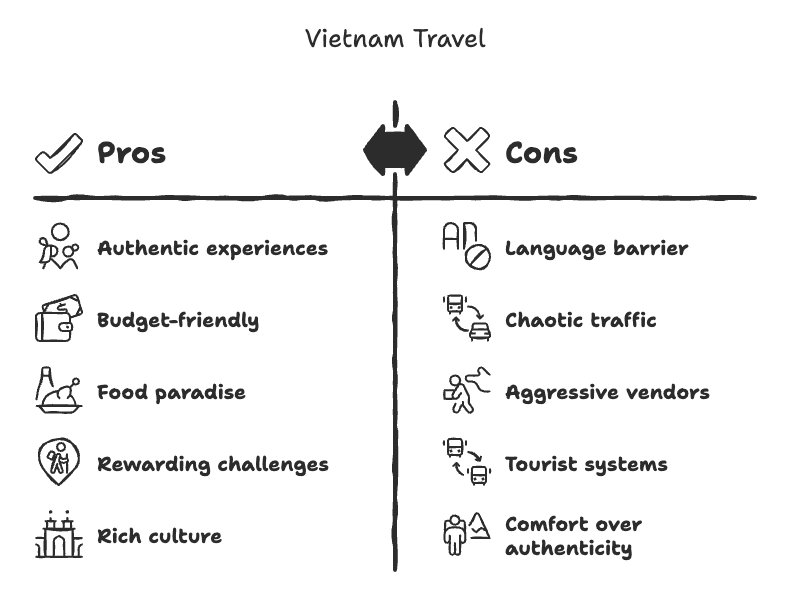
After traveling both Thailand (7 months) and Vietnam (3 months) solo, I can tell you: they're completely different experiences. If Thailand is backpacking on easy mode, Vietnam is backpacking on regular mode—more challenging but also more authentic and rewarding.
What Makes Vietnam Different (And Often Better)
1. Less Tourist Infrastructure = More Authentic Experiences
In Thailand, every hostel has an English-speaking staff member planning your day trips. In Vietnam, the hostel staff might speak broken English, and you'll figure out buses yourself using Google Translate. This sounds like a negative, but hear me out: it forces you to interact more with locals, figure things out, and have genuine adventures rather than packaged experiences.
When I got lost trying to find my hostel in Hanoi's maze-like Old Quarter at 11 PM, three different local families came outside to help me, calling my hostel and walking me there. In Thailand, I would've just opened Google Maps and found it myself. Less convenient? Yes. More memorable and connecting? Absolutely.
2. Significantly Cheaper Than Thailand
Vietnam is 20-30% cheaper than Thailand across the board. My $2 banh mi from a Hanoi street cart at 7 AM (crusty baguette, grilled pork, pickled vegetables, fresh cilantro, and chili) was better than any $5 meal I had in Bangkok. My $7/night hostel in Hoi An was cleaner than $14 Bangkok hostels.
Real price comparisons from my trips:
- Hostel bed: $6-9/night Vietnam vs $12-15 Thailand
- Street food meal: 30,000-60,000 VND ($1.20-2.40) Vietnam vs 50-80 baht ($1.40-2.25) Thailand
- Beer: 15,000 VND ($0.60) Vietnam vs 50 baht ($1.40) Thailand
- Massage: 100,000 VND ($4) Vietnam vs 200 baht ($5.60) Thailand
3. Food Culture Is Next-Level
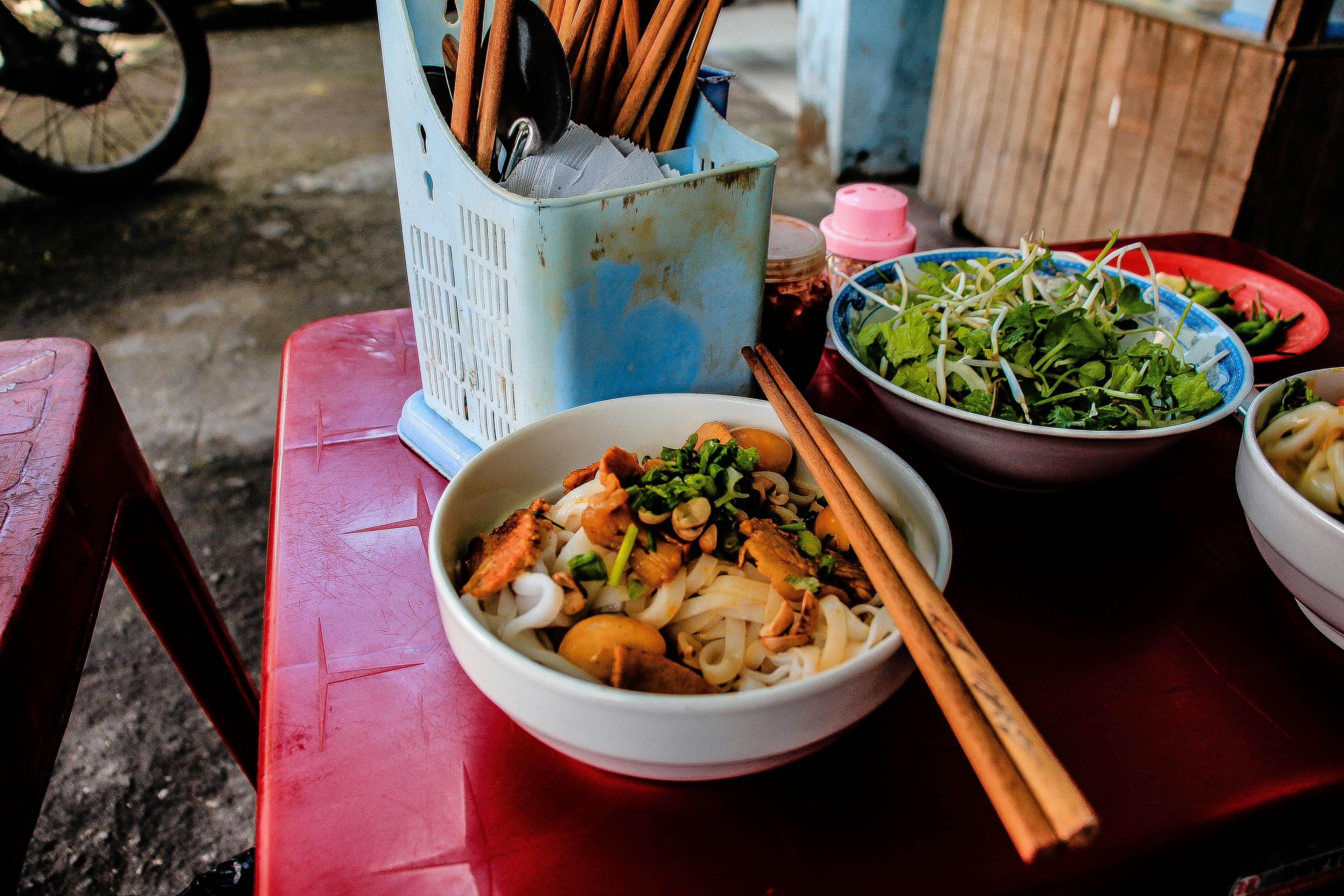
I thought Thai food was amazing. Then I spent three months eating my way through Vietnam and realized Vietnamese food might be even better—lighter, fresher, and more complex. I enjoyed pho for breakfast, banh mi for lunch, bun cha for dinner, and Vietnamese coffee throughout the day. I gained 8 pounds and regret nothing.
Every region has distinct specialties: Hanoi's bun cha, Hoi An's cao lau, Hue's bun bo Hue, and Saigon's com tam. You could eat three meals a day for a month and never repeat a dish.
4. More Challenging BUT More Rewarding
The challenges:
- Less English spoken (especially outside tourist areas)
- More chaotic traffic (crossing streets is an adventure)
- More aggressive vendors (bargaining is a contact sport)
- Fewer clear tourist systems (figuring out buses requires effort)
The rewards:
- When you successfully navigate Vietnam's challenges, you feel like a travel badass
- Interactions with locals feel more genuine (not transactional)
- You see the REAL Vietnam, not tourist Vietnam
- Every small victory feels earned
- You develop serious travel confidence
Who Vietnam Is Perfect For
Vietnam is ideal if you:
- Want authentic travel experiences over comfort
- Love food (seriously, if you're a foodie, Vietnam is paradise)
- Want to stretch your budget further
- Are willing to embrace chaos and uncertainty
- Want to feel accomplished at the end of your trip
- Love history and culture (French colonial and Vietnam War sites everywhere)
- Are comfortable with less English and more figuring-things-out
Vietnam might not be ideal if you:
- Want everything to be easy and comfortable
- Need clear signage and English everywhere
- Get stressed by chaos and unpredictability
- Want party-focused backpacker scene (Thailand wins here)
- This is your very first solo trip AND you're anxious (start with Thailand, then Vietnam)
The Vietnam Vibe vs Thailand Vibe
Thailand: Welcoming, convenient, social, party-focused, easy to navigate, sometimes feels like "tourist Thailand" rather than real Thailand
Vietnam: Raw, authentic, challenging, food-focused, requires problem-solving, definitely feels like REAL Vietnam
Both are incredible. Thailand is perfect for easing into solo travel. Vietnam is perfect for pushing yourself further.
Is Vietnam Safe for Solo Female Travelers?
Let me be direct: Is Vietnam safe for solo female travelers? In my three months traveling solo—yes, generally very safe. I never felt physically threatened or unsafe. Vietnamese people are warm, helpful, and genuinely kind.
HOWEVER, Vietnam has different safety considerations than Thailand. Here's my honest assessment:
My Personal Safety Experience
Across 3 months in Vietnam, traveling to 8 cities:
- Never experienced physical harassment or assault
- Never felt unsafe in my accommodations
- Walked home from restaurants after 10 PM many times without issues
- Used public transport, taxis, Grab constantly
- The biggest "dangers" were petty theft risks (bag snatching) and taxi scams, not personal safety
The most important thing to understand: Vietnam's safety concerns are about PETTY CRIME (pickpocketing, bag snatching, taxi scams), not violent crime. You need to be aware and take precautions, but you don't need to be scared.
SAFETY SPOTLIGHT: Bag Snatching—The One Risk I Worried About
Vietnam's main safety concern: motorbike bag snatching. Someone on a motorbike grabs your bag while driving past. It's rare but does happen in big cities (Hanoi, HCMC, Da Nang).
What I actually do:
- Walk on the building's side of the sidewalk (away from the street).
- Keep bag on shoulder facing buildings (not street-side)
- Use a crossbody bag I can hold in front while walking
- Don't use phone while walking near busy streets
- In cafes, keep bag on lap or wrapped around chair leg, never hanging on chair back
Real talk: In 3 months in Vietnam, I never had issues. But I was cautious. Several other travelers I met had phones snatched while sitting at cafes near the street (someone drives by and grabs it off your table).
Be aware, not paranoid. Take basic precautions and you'll be fine.
[Anti-theft bags on Amazon]
Common Safety Issues and How to Avoid Them
Taxi scams: This is probably the #1 scam tourists face in Vietnam. Tactics include:
- Fake meters that run fast
- "Broken" meters so they quote huge flat rates
- Taking intentionally long routes
- Fake taxi companies that look like real ones (Vinasun knockoffs)
My solution: I exclusively use Grab. Every single time. It's not that I never trust taxis—I just don't want the stress of wondering if I'm being scammed. Grab shows the price upfront and tracks the route.
Pickpocketing: Common in crowded areas like Ben Thanh Market in HCMC, Hanoi's Old Quarter, and packed buses.
What works: Front pockets for valuables, a cross-body bag held in front in crowds, never a wallet in a back pocket, and a backpack worn on the front in very crowded areas.
Aggressive vendors/touts: Vietnam has more aggressive selling than Thailand. Vendors in tourist areas can be very pushy, following you, grabbing your arm, and getting in your face. It's annoying but not dangerous.
How I handle it: Firm "no thank you" without making eye contact, keep walking, don't engage. If they grab my arm, I firmly remove their hand and say "no" loudly. They usually back off. Don't feel bad—they do this all day to everyone.
Accommodation security: Most hostels and hotels are safe. Use lockers, bring your own lock, and don't leave valuables lying around.
One thing that surprised me: I expected more catcalling/harassment as a solo woman. Honestly experienced very little. Vietnamese men were generally respectful. Way less street harassment than I've experienced in European cities.
Situations Where I Felt Unsafe
Being honest, only twice in 3 months:
1. Late night in Hanoi's Old Quarter alone: Drunk groups of local men hanging out late at night, some catcalling. I took Grab home instead of walking after 10:30 PM.
2. A shady-looking xe om (motorbike taxi) driver at night: He kept insisting I get on his bike when I was waiting for my Grab. I went back into a restaurant and waited there. Trust your gut.
Emergency Contacts for Vietnam
- General Emergency: 113 (police), 114 (fire), 115 (ambulance)
- Tourist Police Hanoi: +84-24-3826-4509
- Tourist Police HCMC: +84-28-3829-7304
- U.S. Embassy Hanoi: +84-24-3850-5000
- U.S. Embassy HCMC: +84-28-3520-4200
Program these immediately. I never needed them, but peace of mind matters.
Bottom Line on Safety
Vietnam is safe for solo female travelers who take basic precautions. The risks are petty crime, not violent crime. Be aware of bag snatching, use Grab instead of taxis, keep valuables secure, and trust your instincts. You'll be absolutely fine.
Vietnam Visa Requirements for Solo Travelers
Vietnam visa requirements used to be complicated. Now there's e-visa, and it's a breeze. Here's everything you need to know:
E-Visa (My Recommendation for Most Travelers)
What it is: An Online visa you apply for before traveling, received via email, printed, and presented at immigration.
Who can get it: Citizens of 80+ countries, including the USA, UK, Canada, Australia, and most of Europe.
Cost: $25 USD
How long: 90 days, single OR multiple entry (you choose)
Processing time: 3 business days (though I got mine in 24 hours)
How to apply:
- Go to official site: evisa.xuatnhapcanh.gov.vn (NOT third-party sites charging $50+)
- Fill out form (10 minutes)
- Upload passport photo and passport scan
- Pay $25 with credit card
- Receive email when approved (3 days)
- Print visa and bring to immigration
My experience: I applied 2 weeks before my trip, got approved in 1 day, printed it, showed it at Hanoi airport, and stamped it in 10 minutes. Super easy.
Important: Double-check your passport number before submitting. Mistakes mean reapplying and paying again.
Visa Exemptions (Free Entry)
Some nationalities get visa-free entry for 15–45 days, depending on the country.
- Philippines, Thailand, Indonesia, Singapore: 30 days
- South Korea: 15 days
- Many European countries: 45 days
Check the official Vietnam immigration website for your specific country.
Visa on Arrival (Don't Use This)
This still exists but is pricier and requires an advance approval letter and long lines at the airport. Just get an e-visa instead—it's easier and cheaper.
Border Crossing Considerations
If you're entering Vietnam by land from Cambodia or Laos, an e-visa works at most major border crossings. Check which specific crossing you're using—some remote crossings don't accept e-visas.
I entered via Hanoi airport (e-visa, easy) and left via HCMC airport (no issues). Several travelers I met arrived from Cambodia at the Moc Bai border crossing with e-visas successfully.
Extending Your Stay
Can't extend e-visa. If you want to stay longer than 90 days, you need to leave Vietnam and re-enter (visa run to Cambodia or Thailand) or get a different visa type through an agency.
Budget Breakdown: Vietnam Solo Travel Costs
Here's the truth: Vietnam is one of the cheapest countries in Southeast Asia for travelers. Vietnam is more affordable than Thailand, Malaysia, and significantly less expensive than Singapore or Bali.
I averaged $28/day for 3 months, including accommodation, all food, transport, activities, and even some splurges. Let me break down exactly how.
Daily Budget Options
Ultra Budget ($20-25/day):
- Cheapest hostel dorms ($5-7/night)
- Street food only ($5-7/day)
- Local buses/trains
- Free activities, occasional paid sights
- No drinking/nightlife
Comfortable Budget ($28-35/day): ← This is where I lived
- Decent hostels ($7-9/night) or budget hotels
- Mix of street food and restaurants ($7-10/day)
- Grab for transport, overnight buses
- Regular activities and entrance fees
- Occasional beers/coffee
Mid-Range ($40-50/day):
- Private hotel rooms ($15-25/night)
- Mostly restaurants, some street food
- Grab everywhere, flights between cities
- All activities and tours
- Regular drinks/nightlife
Comfortable/Luxury ($60-80/day):
- Nice hotels ($30-50/night)
- Only restaurants
- Private transport, all flights
- Premium tours
- Lots of drinking/shopping
Daily Budget Comparison: What You Actually Get in Vietnam
| Budget Level | Per Day | Accommodation | Food | Transport | Activities | Best For |
|---|---|---|---|---|---|---|
| Ultra Budget | $20-25 | Cheapest dorm ($5-7) | Street food only ($5-7) | Local buses, walking | Free sights, rare paid entry | Long-term backpackers |
| Comfortable Budget | $28-35 | Decent hostel ($7-9) | Street food + restaurants ($7-10) | Grab, overnight buses | Regular activities | Most solo travelers |
| Mid-Range | $40-50 | Private room ($15-25) | Mostly restaurants ($12-15) | Grab everywhere, some flights | All tours/activities | Travelers 30+ |
| Comfortable | $60-80 | Nice hotel ($30-50) | Restaurants only ($18-25) | Private transport, flights | Premium tours, shopping | Comfort-focused travelers |
Note: These are 2024-2025 prices. Vietnam is 20-30% cheaper than Thailand across all categories.
MY ACTUAL 10-DAY VIETNAM BUDGET (October 2024)
HANOI (3 days):
- Hostel: $24 ($8/night at Vietnam Backpackers Original) → [Hostelworld link]
- Food: $21 ($7/day—street food + one restaurant meal)
- Transport: $12 (Grab rides, bus to Ha Long Bay)
- Activities: $45 (Ha Long Bay 2-day cruise via GetYourGuide) → [link]
HOI AN (3 days):
- Hostel: $21 ($7/night at Tribee Bana Hostel)
- Food: $18 ($6/day—cheaper than Hanoi!)
- Transport: $8 (bicycle rental 50,000 VND/day, bus from Da Nang 40,000 VND)
- Activities: $30 (custom-tailored dress $22, lantern-making class $8)
HO CHI MINH CITY (4 days):
- Hostel: $32 ($8/night at Vietnam Backpackers Downtown)
- Food: $28 ($7/day)
- Transport: $15 (Grab around city, Cu Chi tunnels tour)
- Activities: $25 (War Remnants Museum 40,000 VND, Cu Chi tunnels via GetYourGuide → [link])
ADDITIONAL:
- Insurance: $10 (SafetyWing for 10 days) → [link]
TOTAL: $289 for 10 days = $28.90/day
Note: This doesn't include intercity transport. I spent about 1,200,000 VND (~$50) total on buses between cities (booked via 12Go Asia → [link])
Detailed Cost Breakdown by Category
Accommodation:
- Budget hostel dorm: 150,000-200,000 VND ($6-8/night)
- Mid-range hostel: 200,000-250,000 VND ($8-10/night)
- Budget private room: 250,000-400,000 VND ($10-16/night)
- Budget hotel: 400,000-600,000 VND ($16-24/night)
- Hoi An and smaller towns are cheaper than Hanoi/HCMC
Food (This is where Vietnam shines):
- Banh mi: 15,000-25,000 VND ($0.60-1 each)
- Bowl of pho: 30,000-50,000 VND ($1.20-2)
- Street food meal: 40,000-70,000 VND ($1.60-2.80)
- Local restaurant: 80,000-150,000 VND ($3.20-6)
- Tourist restaurant: 150,000-250,000 VND ($6-10)
- Beer (bia hoi): 5,000-15,000 VND ($0.20-0.60!)
- Vietnamese coffee: 15,000-30,000 VND ($0.60-1.20)
My typical food budget is 150,000-180,000 VND ($6-7/day), eating mostly street food with one sit-down meal.
Transportation:
- Grab motorbike: 15,000-40,000 VND ($0.60-1.60) for most city trips
- Grab car: 40,000-100,000 VND ($1.60-4) depending on distance
- City bus: 5,000-7,000 VND ($0.20-0.28)
- Bicycle rental: 30,000-50,000 VND ($1.20-2/day)
- Overnight bus (Hanoi-Hue): 300,000-450,000 VND ($12-18)
- Train (Hanoi-Sapa hard seat): 140,000 VND ($5.60)
- Domestic flight (Hanoi-HCMC if booked ahead): 600,000-1,500,000 VND ($24-60)
Activities:
- Temple entrance: 20,000-40,000 VND ($0.80-1.60)
- Museums: 20,000-40,000 VND ($0.80-1.60)
- Ha Long Bay cruise (2-day): 2,000,000-3,000,000 VND ($80-120)
- Cu Chi Tunnels tour: 400,000-600,000 VND ($16-24)
- Cooking class: 400,000-800,000 VND ($16-32)
- Massage: 100,000-200,000 VND ($4-8/hour)
Money-Saving Tips Specific to Vietnam
1. Eat street food exclusively (or almost): I ate 80% street food, and my food budget was $6-7/day for three filling meals. Restaurant meals are good, but street food is where real Vietnamese food lives.
2. Use Grab motorbike instead of Grab car: Half the price. I'm talking 15,000 VND ($0.60) vs 40,000 VND ($1.60) for the same trip.
3. Take overnight buses: Saves accommodation. The Hanoi-Hue overnight bus cost 350,000 VND ($14) and saved me an $8 hostel night.
4. Buy beer from shops, not bars: A beer in a bar costs 30,000-50,000 VND ($1.20-2). Same beer from a shop costs 10,000-15,000 VND ($0.40-0.60).
5. Bargain ALWAYS at markets: Initial prices for tourists are often 2-3x the fair price. In Hanoi's Old Quarter, a vendor quoted me 200,000 VND ($8) for a scarf. I paid 60,000 VND ($2.40) after bargaining.
6. Stay longer in smaller towns: Hoi An, Hue, and Da Lat are cheaper than Hanoi/HCMC. I could live on $25/day comfortably in Hoi An vs. $32/day in Hanoi.
7. Skip the tourist restaurants: If the menu has pictures and five languages, you're paying tourist prices. Find places with only Vietnamese customers.
Best Cities and Destinations for Solo Female Travelers
Vietnam's main route runs North to South (or reverse): Hanoi → Ha Long Bay → Ninh Binh → Phong Nha → Hue → Hoi An → Da Nang → Nha Trang → Da Lat → Ho Chi Minh City. Here are my honest takes on the best stops for solo travelers:
Hanoi: Chaotic, Authentic Northern Vietnam
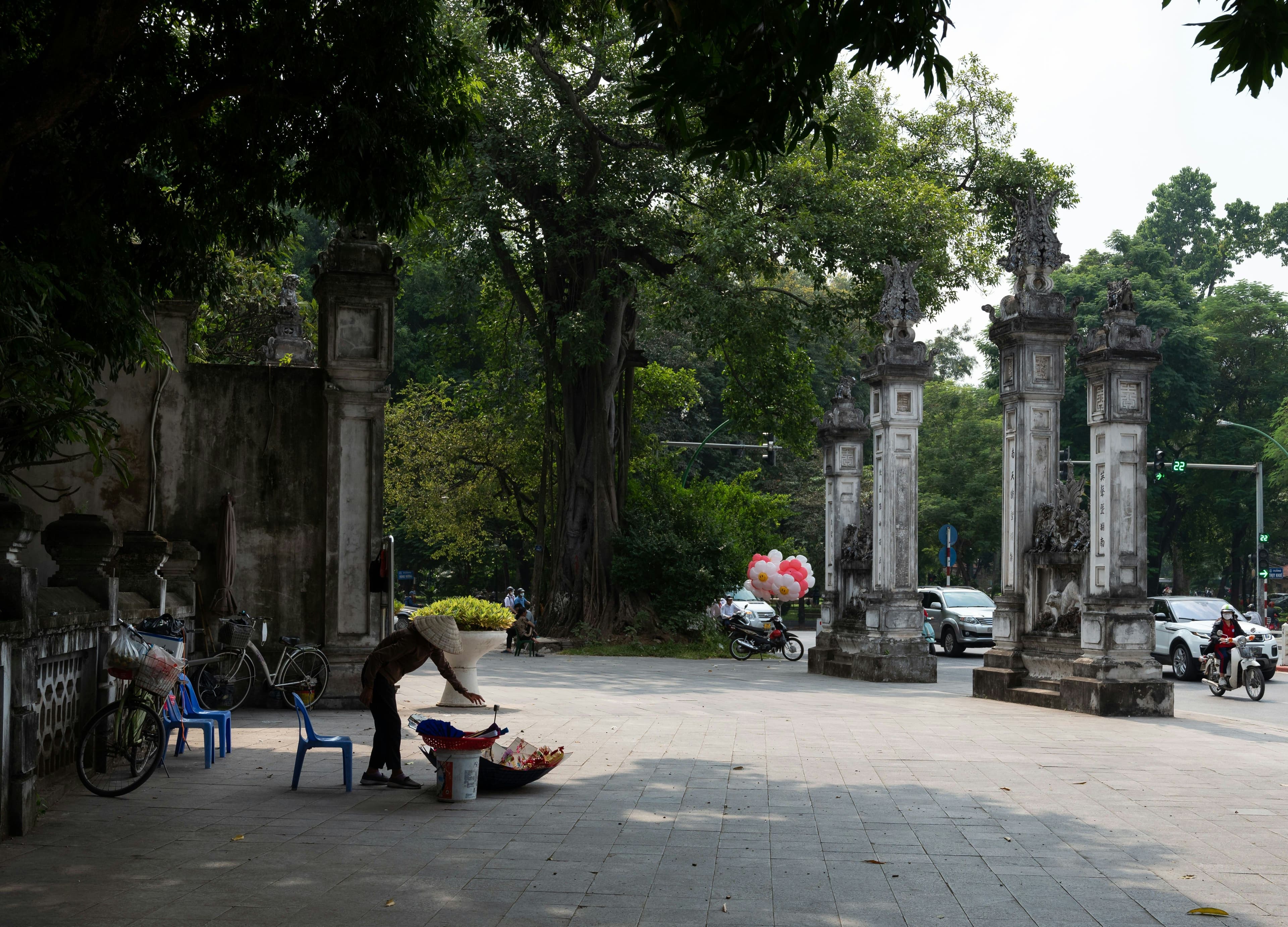
Why solo travelers love/hate it: Hanoi is INTENSE. It's loud and chaotic, with motorbikes everywhere, aggressive vendors, and confusing streets. It's also incredibly authentic, has amazing food, rich history, and a good backpacker scene.
Best area to stay: Old Quarter for social hostels and central location (but it's LOUD). French Quarter for quieter vibes but less social.
Don't miss:
- Old Quarter street food (my $2 bun cha breakfast from a tiny alley stall was perfection)
- Hoan Kiem Lake (walk around at sunset, watch locals doing tai chi)
- Train Street (houses inches from active train tracks—Instagram famous, visit before they close it permanently)
- Temple of Literature (20,000 VND, peaceful respite from chaos)
- Egg coffee (ca phe trung)—weird but delicious
- Weekend night market (Friday-Sunday evenings)
Realistic Hanoi experience: On Day 1, you'll think you've made a horrible mistake. The noise, traffic, aggressive sellers, and getting lost in identical-looking alleys—it's overwhelming. By Day 3, you'll have found your favorite pho spot, mastered crossing streets, and fallen for Hanoi's chaotic charm.
Pros for Solo Travelers:
- Excellent hostel scene (Vietnam Backpackers chain is social)
- Easy to meet other travelers
- Tons of day trip options (Ha Long Bay, Ninh Binh, Sapa)
- Amazing food
- Authentic Vietnamese experience
Cons:
- Overwhelming at first
- Very loud (bring earplugs)
- Aggressive vendors and scammers
- Confusing to navigate
- Less English than HCMC
Recommended stay: 2-3 days (or use as base for day trips: 4-5 days)
Ha Long Bay: Vietnam's Most Famous Natural Wonder
The deal: Famous limestone karsts rising from emerald water. It's touristy but stunning. Solo travelers have two main options:
Option 1: Day trip (~$30-40): Leaves Hanoi at 8 AM, returns at 8 PM, visits the bay on a large boat with 100+ people, and includes lunch and kayaking. Feels rushed and crowded.
Option 2: Overnight cruise (~$80-120): Smaller boats (20-40 people), sleep on the bay, sunrise/sunset views, multiple activities, all meals included.
WORTH THE SPLURGE: 2-Day/1-Night Ha Long Bay Cruise
The $30 day-trip cruises are cattle boats with 200+ people. The $80-120 overnight cruises have 20-30 guests, include kayaking, swimming, cave visits, sleeping on the bay, all meals, and sunrise views that made me cry.
I paid $95 for 2 days/1 night (booked via GetYourGuide), and it was the highlight of my Vietnam trip. Waking up to the bay at sunrise with only a few other boats around is absolutely magical.
As a solo traveler: Most overnight cruises are for couples and families, but I met two other solo women on my boat, and we became friends. The tour company paired solo travelers as roommates.
Book at least 1 week ahead for the best selection and prices.
[Book Ha Long Bay cruise via GetYourGuide]
My recommendation: If you can afford it, do the overnight cruise. It's the one "splurge" in Vietnam that's 100% worth it.

Hoi An: The Easiest, Most Charming Vietnam Stop
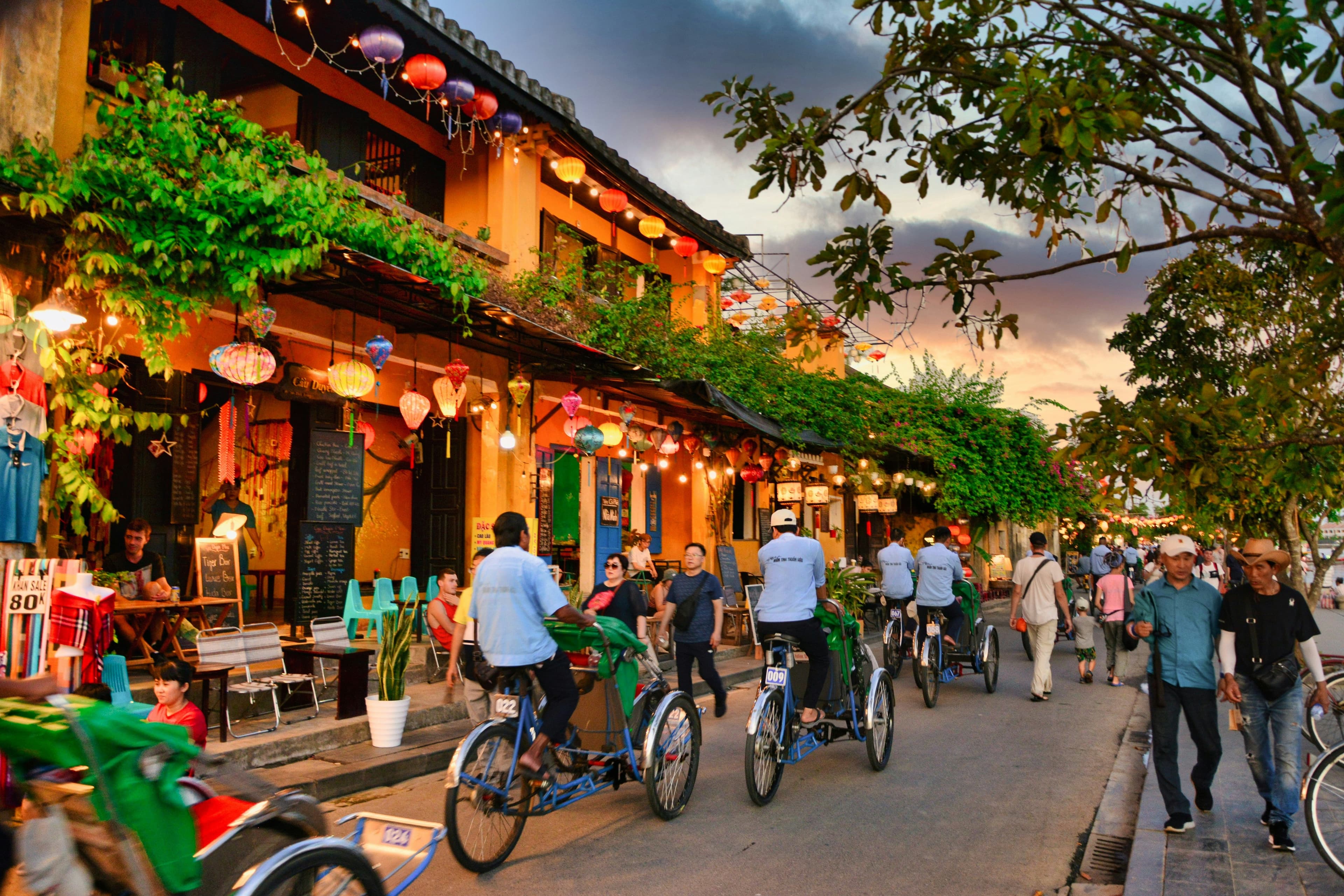
Why solo travelers LOVE it: Hoi An is Vietnam on easy mode. Small, walkable, incredibly charming, tons of solo travelers, less chaotic than Hanoi, amazing food, beautiful. If you're feeling overwhelmed by Vietnam, Hoi An will restore your soul.
What makes it special: Ancient town (UNESCO World Heritage), yellow buildings with lanterns everywhere, riverside setting, tailor shops (get custom clothes made), beaches nearby, and the best food in Vietnam (fight me).
Best area to stay: Around Ancient Town for walking everywhere, or An Bang Beach for beach vibes (20-minute bike ride to town).
Don't miss:
- Ancient Town at night (thousands of lanterns, magical)
- Cao lau (Hoi An's signature dish, only made here with special water—I ate it four times in three days)
- Getting clothes custom-tailored (I got a dress made for 550,000 VND/$22, wore it for a year)
- Biking to An Bang Beach (rent bike for 30,000 VND/$1.20/day)
- Lantern-making workshop (200,000 VND/$8)
- Cooking class (400,000-700,000 VND/$16-28)
Realistic Hoi An experience: It's touristy. The Ancient Town is full of travelers. But it's genuinely beautiful, the food is incredible, and it's SO easy to navigate that you can finally relax after chaotic Hanoi.
Pros for Solo Travelers:
- Small and easy to navigate (everything walkable or bikeable)
- Very safe feeling
- Tons of solo travelers (easiest place to make friends)
- Incredible food scene
- Beautiful Ancient Town
- Beaches nearby
- Lots of activities (cooking classes, tailoring, bike tours)
Cons:
- Very touristy (sometimes feels like Disneyland)
- Can feel too easy after authentic Vietnam
- Expensive by Vietnam standards (still cheap)
- Gets oppressively hot midday
Recommended stay: 3-4 days (many travelers extend to a week)
Ho Chi Minh City (Saigon): Modern, Bustling Southern Vietnam
The vibe: More modern and international than Hanoi, better English, easier to navigate, lots of expats, great nightlife, important war history sites.
Best area to stay: District 1 (Bui Vien area) for the backpacker scene or the Pham Ngu Lao area.
Don't miss:
- War Remnants Museum (40,000 VND—powerful, emotional, essential for understanding Vietnam War from Vietnamese perspective)
- Cu Chi Tunnels day trip (underground Viet Cong tunnel network—claustrophobic but fascinating)
- Ben Thanh Market (touristy but good for shopping; watch for pickpockets)
- Cafe culture (better cafes than Hanoi)
- Bui Vien Street at night (backpacker party street)
- Saigon street food at night markets
Pros for Solo Travelers:
- Easy to navigate (more logical street layout than Hanoi)
- More English spoken
- Great hostel scene
- Modern amenities
- Good nightlife
- Starting/ending point for many trips
Cons:
- Less "authentic" than Hanoi
- Can feel like any modern Asian city
- Traffic is intense
- Very hot and humid
Recommended stay: 2-3 days (or 4 days with Mekong Delta day trip)
Other Destinations Worth Considering
Hue: Former imperial capital, beautiful citadel, amazing bun bo Hue (spicy beef noodle soup) is excellent for history lovers. 2-3 days.
Da Nang: Modern beach city, growing backpacker scene, good beaches, marble mountains nearby. 2 days or skip entirely.
Ninh Binh: "Ha Long Bay on land"—stunning karst landscapes, rice paddies, and boat rides. Beautiful day trip from Hanoi or stay 1-2 nights.
Sapa: Mountain town in the far north, rice terraces, hill tribe treks. I haven't been yet, but other travelers raved about it. 2-3 days.
Phong Nha: Cave region, a paradise for adventurous travelers, and less touristy. 2-3 days.
Da Lat: Cool mountain town (escape the heat), waterfalls, coffee plantations, popular with Vietnamese tourists. 2-3 days.
Where to Stay in Vietnam (Solo Female Accommodation Guide)
Vietnam accommodation is incredibly affordable. Here's my guide to the best places for solo female travelers:
MY TOP PICK FOR HANOI: Vietnam Backpackers Hostel Original (Old Quarter)
I've stayed here twice because:
Why it's perfect for solo travelers:
- Rooftop bar with nightly events (free shots at 9 PM, pub crawls, communal dinners)
- Met my entire Vietnam travel crew here within first hour
- Clean female dorms ($8/night when I went in October 2024)
- Breakfast included (bread, eggs, fruit, coffee)
- Staff organizes affordable Ha Long Bay day trips
- Lockers in rooms (bring own lock)
- Super social—impossible to stay solo long
The downside: Street-facing rooms are LOUD. Hanoi is a city that never sleeps, and staying in the Old Quarter means you will experience constant chaos. I made the mistake of getting a street-facing room my first night and got maybe 3 hours of sleep with motorbikes honking all night.
Pro tip: Request a back-facing room when booking. The room was still social, but it was significantly quieter.
[Book Vietnam Backpackers Hanoi on Hostelworld]
Best Hostel Chain in Vietnam: Vietnam Backpackers Hostels
They have locations in Hanoi (3 locations), Hue, Nha Trang, and Ho Chi Minh City. All have a similar vibe: social, party-focused, good for meeting people, rooftop bars, and organized activities.
Locations I stayed:
- Vietnam Backpackers Original (Hanoi): Most social, craziest, loudest. Best for first-time Hanoi arrivals. $8/night.
- Vietnam Backpackers Downtown (HCMC): Similar vibe to Hanoi but slightly less chaotic. Right on Bui Vien party street. $8/night.
If you're 22-30 and want to meet people/party: These hostels are perfect.
If you're 30+ or want quieter vibes: Look elsewhere (see budget hotels below).
[Search Vietnam Backpackers on Hostelworld.]
Best Hostels by City
Hanoi:
- Vietnam Backpackers Original ($8/night) - Most social, described above
- Hanoi Backpackers Hostel ($7-9/night) - Similar vibe, slightly quieter
- Old Quarter View Hanoi Hostel ($9-11/night) - Boutique hostel, smaller, more mature crowd
Hoi An:
- Tribee Bana Hostel ($7/night)—Where I stayed, super clean, pool, social but not party-crazy, perfect Hoi An vibe
- Hoi An Chic Hotel ($8-10/night) - Boutique hostel, really nice for the price
- Tribee Kinh Hostel ($6-8/night) - Budget option, still good quality
Ho Chi Minh City:
- Vietnam Backpackers Downtown ($8/night)—On Bui Vien street, very social
- The Common Room Project ($10-12/night) - Stylish, slightly more upscale, coworking space
- Selina Bui Vien ($12-15/night) - International chain, good quality, mature crowd
Hue:
- Vietnam Backpackers Hue ($7-9/night) - Part of the chain
- Hue Serene Palace Hotel ($10-12/night) - Budget hotel pricing, good value
[Search All Hostels on Hostelworld]
Budget Hotels ($10-25/night)
Sometimes you want your own room. Vietnam budget hotels are incredible value:
My recommendations:
- Kim Linh Hotel (Hanoi): $18/night, Old Quarter location, private room with AC/hot water/WiFi, clean
- An Nhien Hotel (Hoi An): $15/night, near Ancient Town, rooftop, helpful staff
- Saigon Zoom Hotel (HCMC): $20/night, District 1, modern, good breakfast
- Mimosa Hotel (Hue): $12/night, near citadel, family-run, very helpful
How to find good budget hotels:
- Search Booking.com with the filter $10-25/night and an 8+ rating
- Read reviews specifically from solo travelers
- Look for "helpful staff," "safe," "good location."
- Check Google Maps for surrounding area safety
[Search Budget Hotels on Booking.com]
Homestays in Smaller Towns
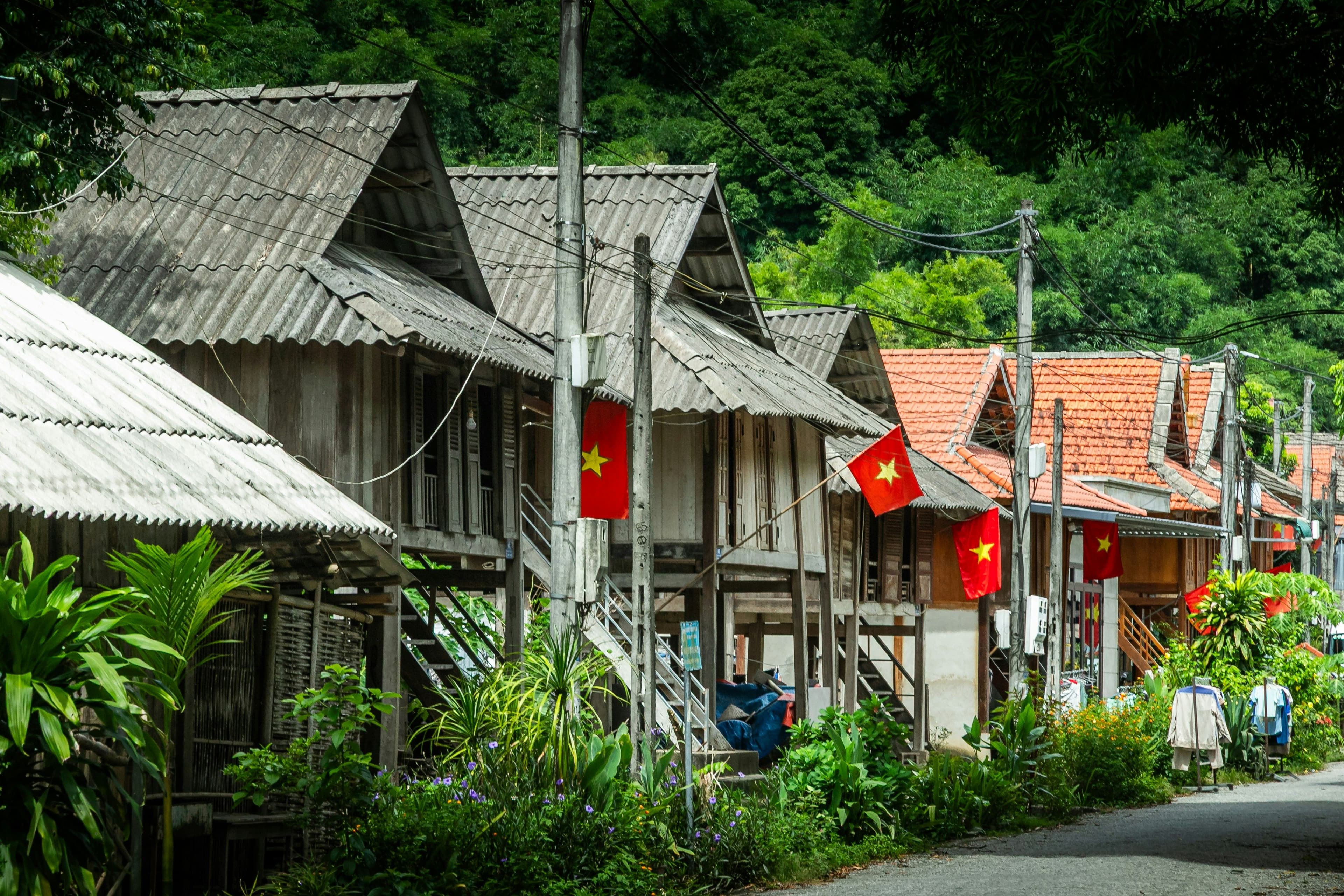
In places like Ninh Binh, Phong Nha, or Sa Pa, homestays are common and often the best option. You stay with a local family, get an authentic experience, get home-cooked meals, and pay $8-15/night.
My Ninh Binh homestay experience: I Stayed with a family for 100,000 VND ($4/night); they cooked me dinner (another 80,000 VND/$3.20), we ate together, they helped me plan my day, and they gave me their bike to use. Genuinely lovely experience.
Book homestays on Booking.com or Agoda, or ask at tourist information centers in town.
Accommodation Safety Tips
- Noise is real: Vietnam is LOUD. Hanoi and HCMC hostels near streets = no sleep. Request back rooms.
- Bring your own lock: Most hostels have lockers but no locks provided
- Check reviews for "solo female traveler" specifically
- Ground floor vs upper floors: I preferred upper floors (felt safer, usually quieter)
- Female dorms worth the extra $1-2: Better sleep, no awkwardness, safer feeling
- Book first 2 nights only: See if you like it, extend it, or move it.
Transportation Guide for Solo Female Travelers in Vietnam
Vietnam transportation requires more navigation skills than Thailand, but once you figure it out, it's affordable and comprehensive. Here's everything I learned:
Grab: Your Essential Vietnam Travel Tool
Download this BEFORE arriving in Vietnam. Grab is essential because Vietnam taxis have major scam issues.
Why Grab is essential:
- Shows price upfront (no meter scams)
- Tracks your route (no crazy detours)
- Drivers can't overcharge
- Works in all major cities
- English interface
- Pay with cash or card
- Can share trip with friends for safety
Grab Bike vs. Grab Car:
- Grab Bike: Motorbike taxi. The Grab Bike is typically more affordable, costing between 15,000-30,000 VND/$0.60-1.20, and is faster in traffic. However, it does require a helmet, which is provided. I used this 80% of the time in cities.
- Grab Car: Regular car. The regular car is more expensive (40,000-100,000 VND/$1.60-4), slower in traffic, and more comfortable, especially when carrying luggage or in the rain.
My real Grab costs:
- Hanoi Old Quarter to Train Station: 35,000 VND ($1.40) bike, 70,000 VND ($2.80) car
- HCMC hostel to War Museum: 25,000 VND ($1) bike
- Hoi An Ancient Town to An Bang Beach: 50,000 VND ($2) bike
Pro tip: Always check the driver photo and license plate match what's shown in app before getting in.
Taxis: Use With Extreme Caution (Or Just Skip Them)
Vietnam taxi scams are legendary. Common scams:
- Meter runs 3-5x normal speed (you pay 10x what you should)
- "Broken meter," so they quote inflated flat rate
- Taking longest possible route
- Fake taxi companies (Mai Linh knockoffs with similar colors/names)
If you MUST use a taxi:
- Only use Mai Linh Taxi (green) or Vinasun Taxi (white)
- Insist on meter before getting in
- Watch the meter (should start around 10,000-15,000 VND)
- Have Google Maps open and track the route.
- Know roughly what price should be
Honest advice: Just use Grab. It's not worth the stress of wondering if you're being scammed.
Overnight Buses: Essential for Budget Vietnam Travel
The reality: Overnight buses in Vietnam range from "surprisingly comfortable" to "this is a circle of hell." Here's how to survive them:
DON'T MAKE MY MISTAKE: Bad Bus Company
I booked an overnight bus without researching the company. The bus broke down twice, blasted freezing AC all night (I was in shorts/t-shirt), stopped at random highway exits where sketchy people got on, and arrived 4 hours late at 6 AM to a random highway exit, not the actual bus station. I stood on a dark highway at 6 AM with my backpack, feeling extremely unsafe.
Lesson learned: Use reputable bus companies (Sinh Tourist, Phuong Trang, The Sinh Cafe, Hanh Cafe) even if they cost 50,000-100,000 VND ($2-4) more. It's worth it.
Book through 12Go Asia for verified companies → [AFFILIATE LINK]
What to bring on overnight buses:
- Hoodie or jacket (AC is ARCTIC cold)
- Long pants (not shorts)
- Socks (even if you're in sandals)
- Neck pillow
- Eye mask
- Earplugs
- Toilet paper (bathroom stops are rough)
- Hand sanitizer
- Snacks and water
How overnight buses work:
- Sleeper buses with reclining beds (some beds better than others—ask for top level if possible)
- Usually depart 6-8 PM, arrive 5-7 AM
- Stops every 2-3 hours (bathroom, food, driver rest)
- They'll wake you up at stops (annoying but necessary)
- Shoes off, stored underneath your seat
Real overnight bus experiences:
- Hanoi → Hue (12 hours): 350,000 VND ($14), decent bus, arrived only 1 hour late, slept about 4 hours
- Hue → Hoi An (4 hours): 120,000 VND ($4.80), short trip, uncomfortable but fine
- Hoi An → Nha Trang (10 hours): 280,000 VND ($11), good bus company, actually slept well
Trains: More Comfortable But Slower
Vietnam's train system is old but charming. Slower than buses but more comfortable.
Classes:
- Hard seat: Wooden benches, cheap, uncomfortable for long journeys
- Soft seat: Padded seats, reasonable for daytime trips
- Hard sleeper: 6-bed compartments, bunks, basic but sleepable
- Soft sleeper: 4-bed compartments, better mattresses, AC, worth extra cost for overnight
Popular routes:
- Hanoi → Hue: 13-14 hours, 350,000-600,000 VND ($14-24) depending on class
- Hanoi → Sapa: 8 hours overnight, 200,000-400,000 VND ($8-16)
- Da Nang → Hue: 3 hours, 80,000-120,000 VND ($3.20-4.80)
Book at train stations or online: dsvn.vn (official but sometimes buggy) or 12Go Asia (easier).
My train experience: I Took an overnight train from Hanoi to Sapa in a tough sleeper. Bunks were thin but okay; I got about 5 hours of sleep, met fascinating local people, and loved watching the countryside go by. Romantic but not comfortable.
Domestic Flights: For Longer Distances
Sometimes flying makes sense, especially Hanoi ↔ HCMC (30-hour bus vs 2-hour flight).
Budget airlines:
- VietJet Air (ultra-low-cost; bring NOTHING or pay fees)
- Bamboo Airways (slightly more but includes baggage)
- Vietnam Airlines (full service, most expensive)
Typical prices if booked 2-3 weeks ahead:
- Hanoi → HCMC: 800,000-1,500,000 VND ($32-60)
- Hanoi → Da Nang: 600,000-1,200,000 VND ($24-48)
- HCMC → Da Nang: 600,000-1,000,000 VND ($24-40)
Pro tips:
- Book directly on airline sites (cheaper than third parties)
- VietJet has frequent sales (flights under 500,000 VND/$20)
- Factor in time/cost to travel to the airport.
- Check baggage allowance (VietJet charges for everything)
Motorbike Rental: Consider VERY Carefully
Renting a motorbike in Vietnam may seem appealing due to the freedom and low cost, but it carries significant risks:
The reality:
- Vietnam has extremely high motorbike accident rates
- Traffic is chaotic, especially in cities
- Police regularly stop tourists (fines for no Vietnamese license)
- Many rental agencies hold your passport (NEVER give it)
- Accidents can mean huge charges or hospital bills
- Most travel insurance doesn't cover motorbike accidents
I rented a motorbike once: In Hoi An for one day (150,000 VND/$6). Roads were flat and calm; I stayed in the countryside, and it was wonderful. Would I rent one in Hanoi? HELL NO.
If you decide to rent:
- ONLY in smaller, calmer towns (Hoi An, Phong Nha, Da Lat)
- NEVER give passport as deposit (leave cash deposit instead)
- Get proper motorcycle insurance
- Have International Driving Permit with motorcycle endorsement (technically required)
- Always wear a helmet.
- Start slow, practice in empty areas
- Avoid cities entirely
Safer alternatives:
- Hire motorbike taxi/driver for day (200,000-300,000 VND/$8-12)
- Rent bicycle (30,000-50,000 VND/$1.20-2/day)
- Use Grab constantly
The Art of Crossing the Street in Vietnam
This deserves its own section because it's genuinely one of the greatest challenges in Vietnam.
The technique that works:
- Stand at the end of the street.
- Make eye contact with drivers
- Step into street slowly and STEADILY
- Keep walking at CONSISTENT pace (don't speed up, slow down, or stop)
- Drivers will flow around you like water
- Don't panic, don't rush, don't hesitate
- Trust the system
What NOT to do:
- Don't wait for a gap (there won't be one)
- Don't freeze mid-crossing
- Don't suddenly speed up or slow down
- Don't try to rush across
Real talk: The first few times are terrifying. By day three it becomes normal. By week two you're crossing without thinking.
Extra tip: Follow local people when possible. Walk next to them and you'll feel safer.
Vietnamese Food Guide for Solo Travelers
If you're a foodie, Vietnam might become your favorite country on earth. The food culture here is incredible—fresh, flavorful, diverse, cheap, and available 24/7.
Must-Try Vietnamese Dishes
Pho (phở): Rice noodle soup with beef or chicken and fresh herbs. The national dish. Best for breakfast. 30,000-50,000 VND ($1.20-2).
Pronunciation tip: It's "fuh," not "foe."
Banh Mi (bánh mì): Vietnamese baguette sandwich with meat, pate, pickled vegetables, cilantro, and chili. French colonialism's gift to Vietnam. 15,000-30,000 VND ($0.60-1.20).
My best banh mi: 20,000 VND ($0.80) from a tiny cart in Hanoi at 7 AM. The woman barely spoke English. I pointed at the pork, she made it fresh, and it was the most perfect sandwich I've ever eaten in my life.
Bun Cha: Grilled pork with rice noodles, herbs, and dipping sauce. Hanoi specialty. Obama and Bourdain ate this together in Hanoi. 40,000-70,000 VND ($1.60-2.80).
Cao Lau: Thick noodles with pork, greens, and crispy wonton. ONLY in Hoi An (made with special local water). Must-try. 30,000-50,000 VND ($1.20-2).
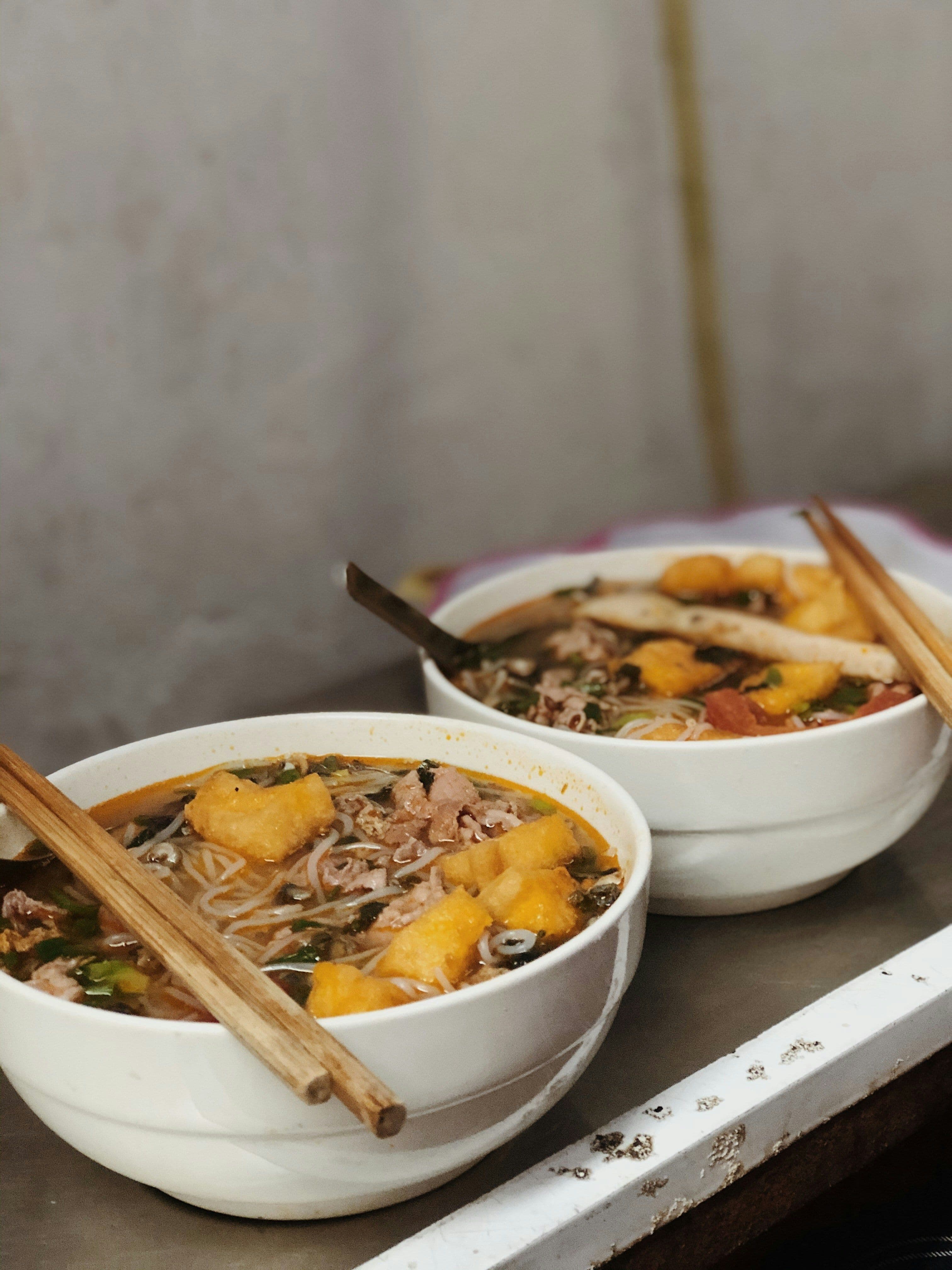
Bun Bo Hue: Spicy beef noodle soup. Hue specialty. Spicier and more complex than pho. 35,000-60,000 VND ($1.40-2.40).
Com Tam: Broken rice with grilled pork, fried egg, and pickles. Southern specialty, great breakfast. 30,000-50,000 VND ($1.20-2).
Goi Cuon (Spring Rolls): Fresh rice paper rolls with shrimp, herbs, rice noodles, and peanut sauce. Light, healthy, and refreshing. 20,000-40,000 VND ($0.80-1.60) for 2 rolls.
Banh Xeo: Crispy crepe filled with pork, shrimp, and bean sprouts. Fun to eat (wrap in lettuce with herbs). 25,000-50,000 VND ($1-2).
Vietnamese Coffee (ca phe): Strong coffee with condensed milk over ice. AMAZING. I had 2-3 per day. 15,000-25,000 VND ($0.60-1).
Special mention: Egg coffee (ca phe trung) in Hanoi—whipped egg yolk with coffee, sounds weird, tastes incredible. 30,000-40,000 VND ($1.20-1.60).
How to Order Street Food (Without Speaking Vietnamese)
This was my process:
- Find a busy stall (locals eating = good sign)
- Point at what others are eating (seriously, just point)
- Hold up one finger (universal for "one please")
- They'll motion you to sit
- Food arrives in 5-10 minutes
- Eat everything except the tiny plate of pickled radish (that's a palate cleanser)
- Flag them down when done, say "tính tiền" (pay please)
- They tell you the price, you pay, and you leave
Pro tips:
- Most street stalls specialize in ONE dish. If everyone's eating pho, that's what they make
- Have small bills (20,000, 50,000, and 100,000 VND notes). Street vendors rarely have change for 500,000 VND
- Watch how locals eat it (some dishes you wrap in lettuce, some have specific sauces)
- Don't tip at street stalls (not expected)
Food Safety Tips
What I ate without issues for 3 months:
- Street food from busy stalls
- Fresh herbs, lettuce (even though it's washed in tap water)
- Ice (Vietnamese ice comes from ice factories; it's safe)
- Fresh fruit (peeled or washed)
- Ice cream from actual shops
What I avoided:
- Street food from stalls with no customers (food sitting out)
- Anything that looked/smelled off
- Unpeeled fruit I didn't peel myself
- Tap water for drinking (brushed teeth with it fine)
Real talk: I got food poisoning ZERO times in 3 months of eating street food daily. Just use common sense. If it looks sketchy, skip it.
Dining Alone as a Solo Female Traveler
Vietnamese people find eating alone slightly unusual (they eat communally), but no one cared that I did it.
Tips for solo dining:
- Sit at small tables, not big communal ones
- Street food stalls are perfect for solo dining
- Cafes are very solo-friendly
- Bring a book or phone (Vietnamese people will assume you're waiting for someone.)
- Some dishes are huge (meant for sharing)—ask for smaller portion or embrace leftovers
Best Food Cities
1. Hanoi: Most diverse Northern food, bun cha, pho, and egg coffee. Best street food scene.
2. Hoi An: Cao lau, amazing restaurants, white rose dumplings. Most charming dining atmosphere.
3. Ho Chi Minh City: Best for Southern food, com tam, and more international options.
4. Hue: Imperial cuisine, bun bo Hue, complex flavors, worth visiting for food alone.
Vegetarian Options
Vietnam is harder for vegetarians than Thailand but doable:
- Look for "com chay" (vegetarian rice restaurants—usually Buddhist-run)
- Learn: "Tôi ăn chay" (I eat vegetarian)
- "Không thịt, không cá" (no meat, no fish)
- Many dishes can be made vegetarian if you ask
- Lots of naturally vegan dishes (fresh spring rolls, many soups)
Buddhist vegetarian buffets exist in most cities—all-you-can-eat for 30,000-50,000 VND ($1.20-2).
Vietnamese Coffee Culture
Vietnam is the world's second-largest coffee exporter. The coffee culture here is INCREDIBLE.
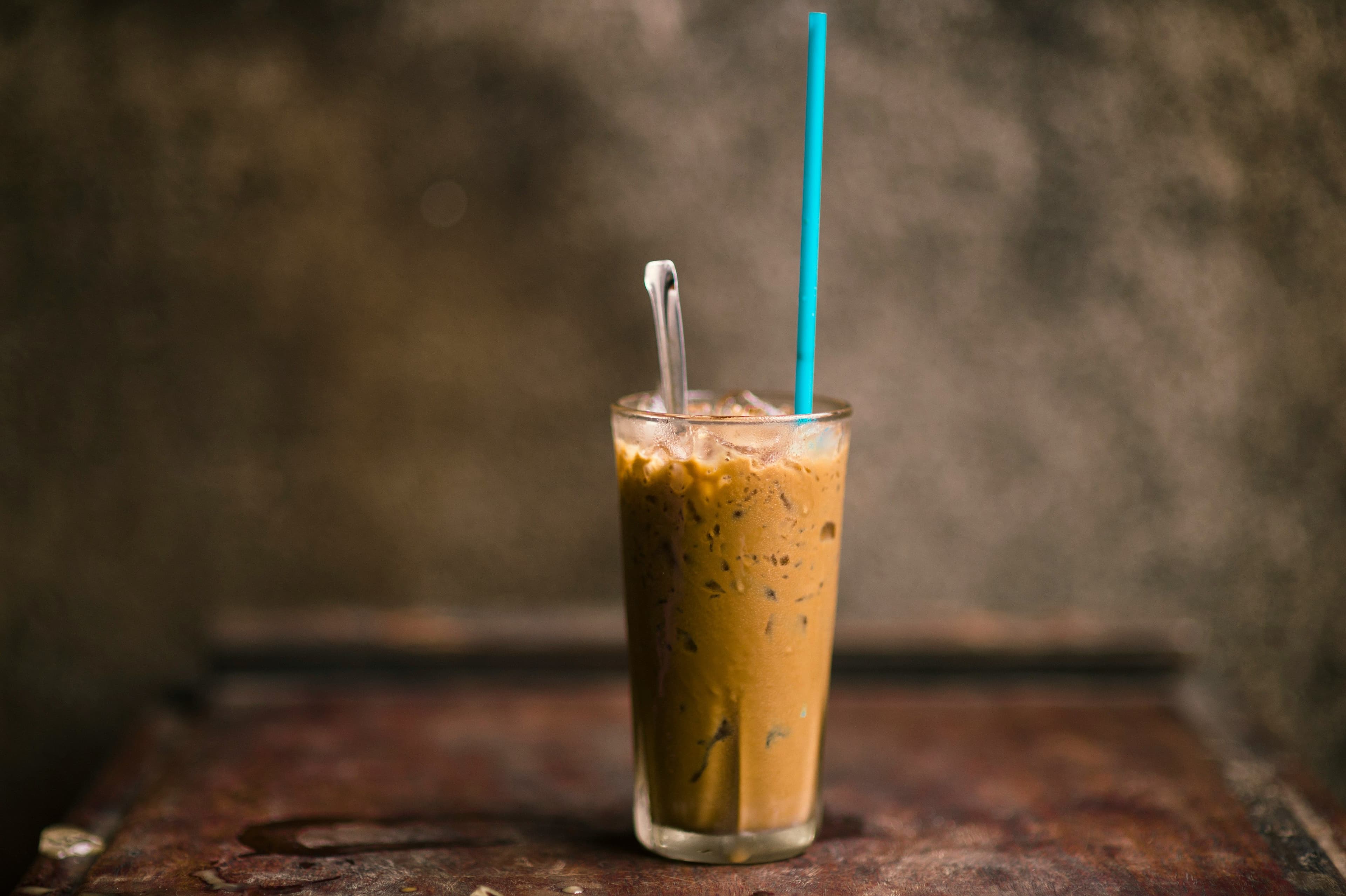
Ca phe sua da: Iced coffee with condensed milk. My daily fuel. 15,000-25,000 VND ($0.60-1).
How it's served: A Small metal filter dripping coffee slowly into a glass with condensed milk and ice. Takes 5-10 minutes to drip. It's an experience.
Best cafe experiences:
- Hanoi: Cafe Pho Co (hidden multi-floor cafe overlooking Hoan Kiem Lake)
- Hoi An: Reaching Out Tea House (employs deaf staff, beautiful peaceful space)
- HCMC: The Workshop (hipster cafe, great coffee, coworking space)
- Everywhere: Random sidewalk plastic stool cafes (most authentic)
Cultural Etiquette and What to Know
Vietnam is a communist country with conservative values and specific cultural norms. Understanding these made my experience much better.
Communist Country Considerations
What this means:
- Avoid criticizing Vietnamese government or communist party
- Don't photograph government buildings or military installations
- Respect propaganda and political monuments (don't pose disrespectfully)
- Be thoughtful at war sites
Real talk: This wasn't an issue day-to-day. Vietnamese people were open to discussing the war from their perspective, but I avoided political debates.
Dress Modestly (Especially in North)
Vietnam is more conservative than Thailand:
- Cover shoulders and knees at temples and pagodas
- In Hanoi and Hue, modest dress is more expected
- HCMC and beach towns are more relaxed
- Avoid revealing clothing in rural areas
I wore lightweight pants or long skirts most of the time and covered my shoulders with a scarf at temples. It's showing respect and avoiding unwanted attention.
Bargaining Culture (More Aggressive Than Thailand)
In Vietnam, bargaining is expected and tends to be more aggressive than in Thailand.
Where to bargain: Markets, street vendors, taxis without meters, souvenirs, sometimes even hotels for longer stays
Where NOT to bargain: Restaurants, cafes, shops with price tags, Grab, trains/buses
How to bargain in Vietnam:
- Start at 40-50% of asking price (sometimes even lower)
- Walk away if price isn't right (they'll often call you back)
- Don't smile as much as in Thailand (Vietnam bargaining is more serious)
- Get multiple quotes before buying
- Never agree to first price
My bargaining experience: In Hanoi's Old Quarter, a vendor quoted 300,000 VND ($12) for a silk scarf. I offered 100,000 VND ($4). She said no. I started walking away. She came after me and agreed to 120,000 VND ($4.80). I've seen that exact scarf in shops for 50,000 VND ($2), but I was okay with my price.
Cultural note: Vietnamese vendors quote much higher initial prices to tourists than Thais do. Don't feel bad bargaining hard—it's expected.
Tipping Not Expected But Appreciated
Tipping isn't part of Vietnamese culture:
- Not expected at street food stalls or local restaurants
- Appreciated at tourist restaurants (5-10% if service was good)
- Not expected for Grab drivers
- Not expected for tour guides (but appreciated)
- Appreciated for exceptional service
I usually rounded up bills or left 10,000-20,000 VND ($0.40-0.80) at nice restaurants.
Vietnamese Phrases Every Traveler Should Know
English is less common in Vietnam than in Thailand. These phrases helped immensely:
| Situation | English | Vietnamese | Pronunciation | When You'll Use It |
|---|---|---|---|---|
| Greeting | Hello/Goodbye | Xin chào | sin chow | Everyone, every day |
| Gratitude | Thank you | Cảm ơn | gahm ern | After everything |
| Negotiating | How much? | Bao nhiêu tiền? | bow nyew tyen? | Markets, bargaining |
| Negotiating | Too expensive | Đắt quá | dat qua | When bargaining |
| Ordering | Delicious! | Ngon! | non | Compliment to vendors |
| Ordering | Not spicy | Không cay | kohm kai | Food orders |
| Ordering | I eat vegetarian | Tôi ăn chay | toy an chay | Restaurants |
| Ordering | Check please | Tính tiền | tin tyen | When finished eating |
| Navigation | Where is...? | ...ở đâu? | ...uh dow? | Finding places |
| Help | I don't understand | Tôi không hiểu | toy kohm hew | Communication breakdown |
| Help | Help me! | Giúp tôi! | joop toy | Emergency only |
| Basics | Yes | Vâng/Dạ | vung/za | Formal/informal |
| Basics | No | Không | kohm | Saying no to touts |
Reality: Even learning these helped a LOT. Vietnamese people appreciated any effort and were much more helpful when I tried to speak Vietnamese.
Pro Tips:
- Women add "a" sound to end of sentences (xin chào + a)
- Pronunciation is tonal
- your attempt will be wrong but appreciated
- Pointing + phrase = more effective than phrase alone
- Vietnamese people LOVE when you try their language
Propaganda/War Sites Etiquette
Vietnam has many war-related sites and propaganda:
At war museums/sites:
- Be respectful (this is living history for Vietnamese people)
- Many displays show American atrocities—prepare emotionally
- Don't pose for selfies at serious/tragic displays
- Listen to Vietnamese perspective on war
- Remember: their country was devastated
My War Remnants Museum (HCMC) experience: Extremely powerful and disturbing. The exhibits included Agent Orange effects, civilian casualties, and war photos. I saw American tourists making jokes and taking silly selfies. Don't be that person.
Public Displays of Affection
Vietnam is conservative about PDA:
- Hand-holding is generally okay
- Kissing in public is frowned upon (especially in the North).
- Hugging goodbye is okay
- Save anything more for private
I saw young Vietnamese couples holding hands but rarely more.
Removing Shoes
Like in Thailand, you remove shoes:
- At temples and pagodas (always)
- When entering homes
- Some shops and businesses
- Some guesthouses and hotels
Look for shoe racks outside or if everyone else is barefoot.
Best Time to Visit Vietnam (By Region)
This is crucial: Vietnam has THREE different climate zones. The weather in Hanoi, Hoi An, and HCMC can be completely different at the same time.
Vietnam Climate Zones Explained
Northern Vietnam (Hanoi, Ha Long Bay, Sapa):
- Has actual seasons (winter, spring, summer, fall)
- Best time: October-April (cool and dry)
- Avoid: May-September (hot, humid, rainy)
- December-February can be surprisingly cold (10-15°C/50-59°F), especially in Sapa
Central Vietnam (Hue, Hoi An, Da Nang):
- Affected by both monsoons
- Best time: February-May (warm and dry)
- Avoid: October-January (heavy rain—seriously, it POURS)
- Can have terrible flooding October-December
Southern Vietnam (HCMC, Mekong Delta, Con Dao):
- Tropical—hot year-round
- Best time: December-April (dry season)
- Avoid: May-November (rainy season, but still visitable)
- Less dramatic weather than North/Central
Vietnam Climate Guide: When to Visit Each Region
| Region | Best Months | Good Months | Avoid | Temperature Range | What to Expect |
|---|---|---|---|---|---|
| North (Hanoi, Ha Long Bay, Sapa) | Oct-Dec, Mar-Apr | Jan-Feb, May | Jun-Sep | 50-85°F (10-29°C) | Cool/dry best. Dec-Feb can be cold. Summer hot/humid. |
| Central (Hue, Hoi An, Da Nang) | Feb-May | Jun-Sep | Oct-Jan | 77-95°F (25-35°C) | Dry season ideal. Oct-Dec = heavy rain/flooding. |
| South (HCMC, Mekong) | Dec-Apr | May, Nov | Jun-Oct | 82-95°F (28-35°C) | Hot year-round. Dry season best. Rainy season = afternoon showers. |
Key Insight: You cannot visit all of Vietnam with "perfect" weather at once. Plan your route based on season.
Best Overall Times:
- March-April: Good weather in all regions (most popular)
- October-November: North perfect, South perfect, Central risky
- December-February: North cool, Central rainy, South perfect
When I Traveled (September-October)
My experience:
- Hanoi: Perfect weather—cool, dry, comfortable (20-28°C/68-82°F)
- Hoi An: End of rainy season, had two rainy days but mostly okay
- HCMC: Rainy season but afternoon showers were predictable
Pros of shoulder season:
- Cheaper accommodation
- Fewer tourists
- Actually a lovely time to visit
Month-by-Month Breakdown
January-February:
- North: Cool, can be cold (bring layers), dry
- Central: Some rain but improving
- South: Perfect (dry season)
- Best for: Tet (Vietnamese New Year)—see below
March-April:
- North: Warming up, beautiful
- Central: Best time to visit—warm and dry
- South: Hot but still dry
- Best for: North-to-South trip
May-June:
- North: Hot and increasingly humid
- Central: Still okay but getting hot
- South: Rainy season begins
- Best for: Fewer tourists, lower prices
July-August:
- North: Hot, humid, occasional rain
- Central: Hot and sometimes rainy
- South: Rainy season (but mostly afternoon showers)
- Best for: Budget travel; avoid if you hate heat
September-October:
- North: Beautiful autumn weather
- Central: Tail end of rainy season (can still get downpours)
- South: Still rainy
- Best for: North Vietnam specifically
November-December:
- North: Cool and dry—perfect
- Central: Rainy season (avoid or risk flooding)
- South: Dry season begins—perfect
- Best for: Hanoi + HCMC (skip Central Coast)
Tet (Vietnamese New Year) - Special Consideration
Tet falls in late January or early February (lunar calendar, changes each year).
During Tet (about 1 week):
- Vietnam essentially shuts down
- Most shops and restaurants closed
- Transport booked solid
- Prices skyrocket
- Locals return to hometowns
- BUT: Incredible cultural experience if you don't mind closures
My recommendation:
- Experience Tet IF you're prepared for closures/crowds
- Avoid Tet IF you want normal travel
My Honest Recommendation
Best time for first-time visitors: March-April (good weather everywhere) or October-November (North perfect, South perfect; take your chances with Central)
Best time for budget travelers: May-September (rainy season = cheaper everything)
Avoid if possible:on October-December on Central Coast (flooding can be severe)
North to South: Classic Vietnam Route for Solo Travelers
Most travelers follow the "Gringo Trail" through Vietnam: Hanoi → Ha Long Bay → Ninh Binh → Phong Nha → Hue → Hoi An → Da Nang → Nha Trang → Da Lat → Ho Chi Minh City
Should You Go North to South or South to North?
North to South (Hanoi → HCMC):
- Most common direction (70% of travelers)
- Start with chaotic Hanoi (trial by fire, gets easier)
- End in modern HCMC (easier city, good for recharging before flying home)
- Weather considerations: depends on season
South to North (HCMC → Hanoi):
- Less common but perfectly valid
- Start easy in HCMC, end in challenging Hanoi
- Meet fewer travelers (everyone's going opposite direction)
- Weather considerations: depends on season
My experience:first, I went North to South. Hanoi was overwhelming at first, but I'm glad I got it out of the way early. By the time I reached HCMC, I was a Vietnam pro.
How Long Do You Need?
Absolute minimum: 10 days (Hanoi → Hoi An → HCMC, very rushed)
Comfortable first-timer: 2-3 weeks (hits highlights without rushing)
Thorough Vietnam experience:off-the-beaten-path 4-5 weeks (includes off-the-beaten-path spots)
Long-term backpacking: 2-3 months (see everything, move slowly, get deep)
Transport Between Cities
Buses: Cheapest option, 150,000-450,000 VND ($6-18) depending on distance, overnight for long routes
Trains: More comfortable, 200,000-600,000 VND ($8-24), overnight sleepers available
Flights: Fastest for long distances (Hanoi-HCMC), 800,000-1,500,000 VND ($32-60) if booked ahead
through 12Go Asia (shows all options, verified companies, easy booking)
Sample Vietnam Itineraries for Solo Female Travelers
Here are tested itineraries based on different timeframes:
10-Day Vietnam Highlights (Rush Version)
Day 1-2: Hanoi
- Arrive, adjust, explore Old Quarter, eat street food
- Accommodation: Vietnam Backpackers Original ($8/night)
- Budget: $30/day
Day 3: Ha Long Bay
- Day trip cruise ($40) OR overnight cruise ($95—recommended)
- Budget: $40-95 + accommodation if needed
Day 4-5: Hoi An (Overnight bus from Hanoi)
- Ancient Town, tailoring, beach, food
- Accommodation: Tribee Bana ($7/night)
- Budget: $25/day
Day 6-8: Ho Chi Minh City (Flight or long bus)
- War museum, Cu Chi tunnels, street food, cafes
- Accommodation: Vietnam Backpackers Downtown ($8/night)
- Budget: $30/day
Day 9-10: Mekong Delta day trip + Depart
- Day trip to Mekong ($25-35)
- Fly home from HCMC
Total: ~$450-550 (including splurge on Ha Long Bay overnight)
2-Week Vietnam Itinerary (Comfortable Pace)
Days 1-3: Hanoi
- 2 nights adjustment, street food, cafes
- Day trip to Ninh Binh (100,000 VND/$4 bus each way)
Day 4: Ha Long Bay
- 2-day/1-night cruise (sleep on boat, included in day count)
Days 5-7: Hue (Overnight bus from Hanoi)
- Imperial Citadel, tombs, food
Days 8-10: Hoi An (Bus from Hue, 4 hours)
- Ancient Town, tailoring, bicycle to beach, cooking class
Day 11: Da Nang (Stop for beach day or skip)
Days 12-14: Ho Chi Minh City
- War sites, food, shopping, Cu Chi tunnels
- Mekong Delta day trip
Total: ~$550-700
3-Week Thorough Vietnam Itinerary
Add to 2-week itinerary:
- 2 days in Phong Nha (caves, adventure activities)
- 3-4 days in Da Lat (mountain town, waterfalls, cooler weather)
- OR 3 days in Nha Trang (beach, diving, party scene)
- OR 2-3 days in Sapa (mountain trekking, rice terraces)
Total: ~$700-900
4-Week Complete Vietnam
the aboveAll of the above PLUS:
- Extended time in favorite cities
- Off the beaten path:Off the beaten path: Con Dao islands, Phu Quoc, Mu Cang Chai
- Slower pace (2-3 nights minimum everywhere)
- More cooking classes, motorbike day trips, relaxation
Total: ~$850-1,100
What to Pack for Vietnam
Vietnam'sVietnam's climate varies dramatically by region and season. Here's what actually mattered:
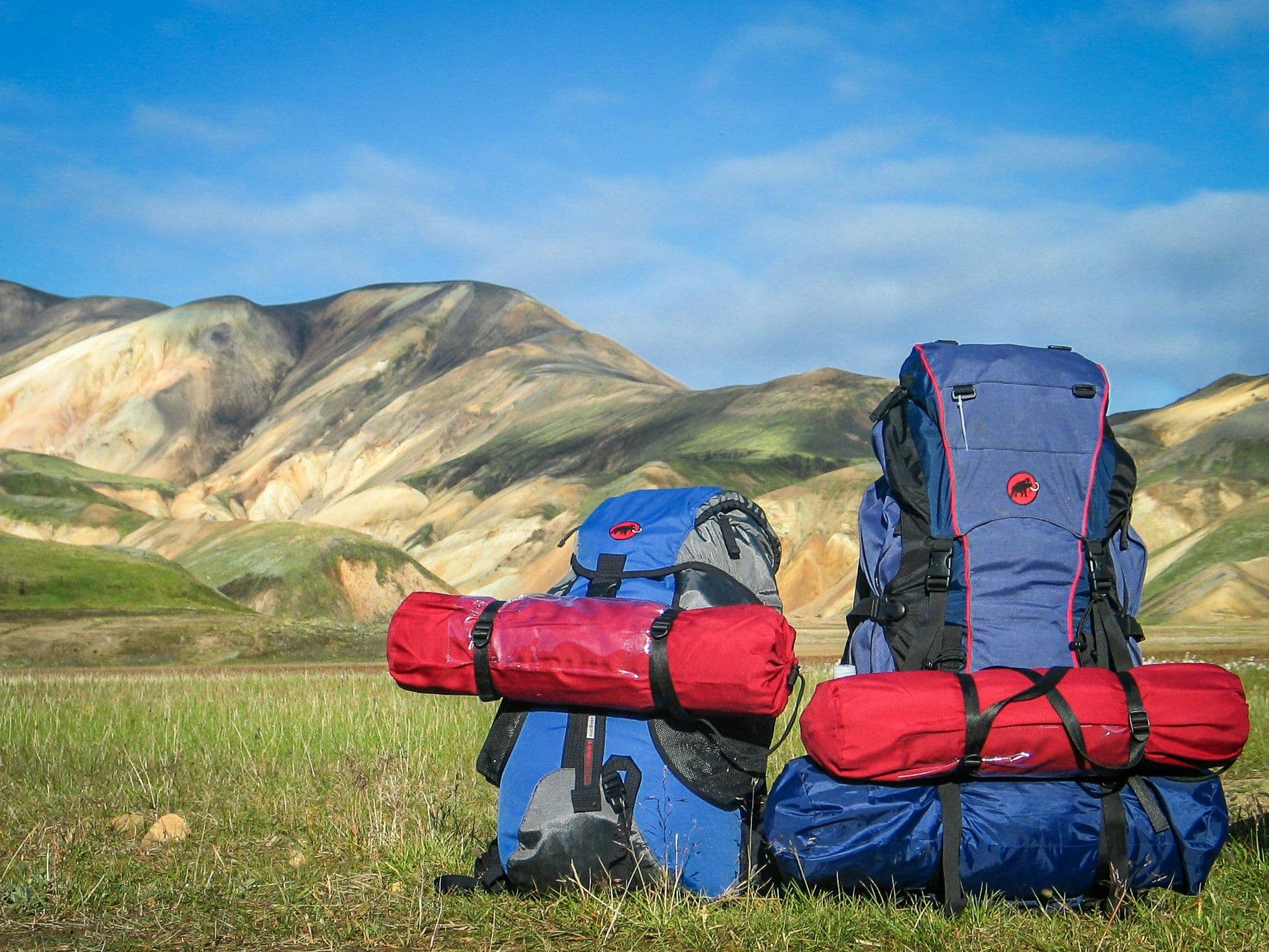
Essential Clothing
Modest Coverage:
- 2-3 lightweight long pants (linen, cotton, quick-dry)
- 2-3 long skirts (easy for temples)
- Large scarf/sarong (temples, sun protection, airplane blanket)
- 3-4 t-shirts that cover shoulders
- 1 lightweight long-sleeve shirt (sun/mosquitoes/temples)
Casual Wear:
- Shorts for hostel/beach (just not temples)
- Tank tops for hot days
- Swimsuit
- 1 "nice" outfit for dinners
Footwear:
- Comfortable walking sandals (you'll walk MILES)
- Flip-flops for showers/beach
- One pair closed-toe shoes (some temples require)
Vietnam-Specific:
- Light rain jacket OR poncho (depending on season/region)
- Face mask for motorbike exhaust (air quality in cities)
- Warm layer if visiting North Oct-March (can get cold)
Climate Considerations by Region
Northern Vietnam (Oct-April):
- Layers! Can be cool/cold
- Light jacket or fleece
- Long pants
- Closed-toe shoes
Central Vietnam (Feb-May):
- Light, breathable clothing
- Sun protection (it's HOT)
- Rain gear if Sep-Jan
Southern Vietnam (Dec-April):
- Lightest clothes possible
- Rain gear if May-Nov
Everywhere Year-Round:
- Sun protection (hat, sunglasses, sunscreen)
- Clothes that dry fast
Vietnam-Specific Items
Bring from home:
- Good walking shoes/sandals (Vietnamese sizes may not fit Western feet well)
- Sunscreen (expensive in Vietnam, reef-safe if visiting islands)
- Prescription medications in original packaging
- Travel insurance info printed
- Face mask for pollution/dust
- Earplugs (Vietnam is LOUD—hostels, traffic, roosters)
Buy in Vietnam (cheaper):
- Cheap rain poncho from any convenience store (20,000 VND/$0.80)
- Conical hat (non la) for sun (30,000-50,000 VND/$1.20-2)
- Light clothes if you underpacked
- Basic toiletries at any pharmacy
What NOT to Pack
- Heavy jeans (too hot most of the year)
- More than one week's clothing (laundry is cheap—20,000 VND/$0.80 per kilo)
- Hair dryer (hostels have them)
- Towel (hostels provide)
- e-reader;Books (download to e-reader; physical books are heavy)
Technology & Security
- Phone with good camera
- Power bank (essential—you'll use Google Maps constantly)
- Vietnam uses Type A, C, D outlets—bring universal adapter
- Padlock for hostel lockers
- Money belt or hidden pouch (for passport, emergency cash)
- Backup credit/debit card stored separately
First Aid & Medications
- Imodium (for food issues)
- Pain relievers
- Antihistamine
- Motion sickness pills (Vietnam buses are curvy)
- Electrolyte packets
- Band-aids, antibiotic ointment
- Any prescription meds (3-month supply)
Note: Vietnam pharmacies are excellent and cheap. I bought antibiotics for suspected food poisoning for 50,000 VND ($2) at a pharmacy. Don't overpack medications.
[Shop Travel Essentials on Amazon]
Common Mistakes to Avoid in Vietnam
Here are the mistakes I made (or watched others make) so you don't have to:
1. Not Getting E-Visa Early Enough
Mistake: Waiting until the last minute to apply for a visa.
Why it's bad: E-visa takes 3 days to process. If you need it faster, you pay rush fees. Some people arrive without a visaa visa. and pay way more for a visa on arrival.
Fix: Apply for an e-visa 2-3 weeks before your trip. Costs $25, takes 3 days, super easy.
2. Exchanging Money at the Airport
Mistake: Exchanging large amounts of cash at the airport exchange counter.
Why it's bad: Terrible exchange rates (10-15% worse than city rates).
Fix: Exchange only enough at the airport for the first day ($20-30), then use ATMs in the city or exchange at gold shops (much better rates). I used ATMs exclusively—withdrawing VND directly.
3. Trusting Taxi Drivers
Mistake: Taking a metered taxi from the airport without knowing about scams.
Why it's bad: Fake meters, long routes, and overcharging are common. I watched someone pay 800,000 VND ($32) for a ride that should've cost 200,000 VND ($8).
Fix: Use Grab exclusively. Download before arriving in Vietnam.
4. Booking Bad Bus Companies
Covered this in my "Don't Make My Mistake" box above. Use reputable companies only.
5. Not Carrying Small Bills
Mistake: Only having 500,000 VND bills ($20).
Why it's bad: Street vendors, small shops, and taxis often can't make change. You'll either overpay or not be able to buy things.
Fix: Always have 20,000, 50,000, and 100,000 VND notes. When withdrawing from an ATM, immediately break large bills at convenience stores or supermarkets.
6. Saying Yes to First Price at Markets
Mistake: Accepting the first quoted price at tourist markets.
Why it's bad: The Initial price for tourists is often 3-5x the fair price.
Fix: Bargain always. Start at 40-50% of the asking price. Walk away if they won't negotiate (they usually follow you).
7. Not Learning ANY Vietnamese
Mistake: Assuming English will work everywhere.
Why it's bad: Outside tourist centers, English is very limited. Not knowing basic phrases makes everything harder.
Fix: Learn 5-10 basic phrases. Even terrible pronunciation helps. Vietnamese people appreciate effort and are much more helpful when you try.
8. Rushing Through Too Fast
Mistake: Trying to see all of Vietnam in 10 days, moving cities every 2 days.
Why it's bad: You'll spend all your time on buses, feel exhausted, and not actually experience anywhere.
Fix: Minimum 2-3 nights per city. Better to see fewer places deeply than many places superficially.
9. Booking Too Much in Advance
Mistake: Booking the entire itinerary before arriving (hotels for every night, tours for every day).
Why it's bad: Vietnam requires flexibility. You'll meet travelers with better recommendations, want to stay longer in places you love, and skip places you don't.
Fix: Book the first 2-3 nights only. Then book as you go. Accommodation is so abundant you rarely need advance bookings (except for Ha Long Bay cruises and peak season).
10. Underestimating Language Barrier
Mistake: Thinking Vietnam will be as easy as Thailand for English speakers.
Why it's bad: It's not. English is much less common. This affects everything from ordering food to asking directions to navigating transport.
Fix: Accept it's more challenging. Download Google Translate, have patience, and embrace the communication challenge as part of the adventure.
Language Barrier: How to Navigate Vietnam Without Speaking Vietnamese
The language barrier in Vietnam is REAL. This was probably my biggest challenge. Here's how I managed:
The Reality of English in Vietnam
Where English works okay:
- Tourist hostels/hotels
- Tourist restaurants in major cities
- Tour companies
- Airports
Where English barely exists:
- Street food stalls
- Local shops/markets
- Bus stations
- Small towns
- With taxi drivers
- Most locals on the street
My experience: I'd estimate 20-30% of people in tourist areas spoke basic English, compared to 60-70% in Thailand. Outside tourist areas, close to zero.
Essential Tools & Strategies
1. Google Translate (Essential)
- Download Vietnamese language pack for offline use
- Use camera feature to translate signs/menus
- Type English, show them Vietnamese translation
- Have them type Vietnamese, Google translates to English
Real example: At the bus station, I needed a ticket to Hoi An. Ticket seller spoke zero English. I typed "one ticket to Hoi An tomorrow at 8 AM" in Google Translate and showed her phone. She nodded, typed the price in the calculator, I paid, and done.
2. Translation Apps
- Google Translate: Best overall
- Papago: Alternative, sometimes better for Vietnamese
- Microsoft Translator: Good backup
3. Screenshots & Photos
- Screenshot your hotel name/address in Vietnamese
- Photo of your destination to show taxi/Grab drivers
- Photos of food you want to order
- Keep important Vietnamese text saved
4. Written Communication
- Carry small notepad
- Many Vietnamese people can read English better than speak it
- Writing simple English sometimes works
- They can write numbers (prices) for you
5. Hand Gestures & Pointing
- Point at menu items (or at what others are eating)
- Use calculator or phone to show numbers (prices)
- Google Maps to show where you're going
- Universal gestures (thumbs up, waving, etc.)
Restaurant/Street Food Ordering Without Vietnamese
My process:
- Look at what others are eating
- Point to their dish
- Hold up fingers for how many
- They nod and prepare
- When done, say "tính tiền" (pay please) or gesture for the bill
- They tell/show you the price
- Pay and leave
For sit-down restaurants:
- Many have picture menus
- Use Google Translate camera on Vietnamese menu
- Point to pictures
- Ask for English menu (some have them, many don't)
Getting Help When Lost/Confused
What worked for me:
- Show Google Maps destination to locals
- They often grab your phone and gesture directions
- Young people more likely to speak some English
- Hotel/hostel staff are your best resource—ask before leaving
- Coffee shop staff in cities often speak English
- Fellow travelers, obviously.
Emergency Vietnamese phrases:
- "Xin lỗi" (excuse me)
- "Giúp tôi" (help me)
- Show them written address/destination
- "Police" is understandable (though pronunciation is "police")
Transportation Without Vietnamese
Buses:
- Book online (12Go Asia) so you don't need to explain at the station.
- Show confirmation email/ticket
- Most buses have route signs in English too
Taxis/Grab:
- Grab shows destination in app (no explanation needed)
- For regular taxis, show address on the phone.
Trains:
- Ticket windows sometimes have English
- Write destination, date, time, class preference
- Show to ticket seller
Learning Survival Vietnamese
These phrases helped me more than anything:
Essential 10:
- Hello: xin chào (sin chow)
- Thank you: cảm ơn (gahm ern)
- How much: bao nhiêu tiền (bow nyew tyen)
- Yes: vâng (vung)
- No: không (kohm)
- I don't understand: tôi không hiểu (toy kohm hew)
- Please: làm ơn (lahm ern)
- Delicious: ngon (non)
- Pay please: tính tiền (tin tyen)
- Too expensive: đắt quá (dat qua)
Reality check: Even with terrible pronunciation, using these phrases made Vietnamese people SO much more patient and helpful with me.
My Honest Assessment
The language barrier in Vietnam is challenging. There were moments I felt frustrated, helpless, and lost. But it also forced me to:
- Be more creative communicating
- Pay attention to non-verbal cues
- Develop patience
- Connect with locals in different ways
- Feel accomplished when I successfully navigated situations
Bottom line: The language barrier makes Vietnam harder than Thailand. But it's totally manageable with the right tools and attitude. Don't let it scare you off.
Frequently Asked Questions About Solo Female Travel Vietnam
Ready for Your Vietnam Adventure?
Key Takeaways:
- Vietnam is more challenging than Thailand but incredibly rewarding—expect authentic experiences, less English, chaotic traffic, but also better food, cheaper prices, and deeper cultural immersion
- Budget $25-35/day comfortably ($28/day was my 3-month average) —Vietnam is 20-30% cheaper than Thailand
- Get e-visa before you go ($25, 3 days, easy process at evisa.xuatnhapcanh.gov.vn)
- Download Grab immediately—it's essential for safe transport (taxis have major scam issues)
- Start in Hanoi or Ho Chi Minh City where hostels and traveler communities make logistics easier
- Learn basic Vietnamese phrases—even terrible pronunciation helps enormously with the real language barrier
- Use reputable bus companies (Sinh Tourist, Phuong Trang) and book through 12Go Asia
I spent 3 months in Vietnam expecting Thailand 2.0. Instead, I got something completely different—rawer, harder, more authentic, and ultimately more transformative. Vietnam doesn't hold your hand. It throws you into chaotic streets, makes you figure out buses with Google Translate, and forces you to communicate with gestures and patience.
And that's exactly what makes it incredible.
Your turn. Vietnam rewards brave travelers. The first time you successfully navigate a street crossing in Hanoi, order pho without speaking Vietnamese, or wake up on a Ha Long Bay cruise at sunrise—you'll understand why Vietnam challenges you. Because the challenges make the victories so much sweeter.
Questions about Vietnam solo travel? Drop a comment below. Planning your itinerary and need specific advice? Tell me your timeframe and budget—I love helping travelers prepare for Vietnam's beautiful chaos!
[Get SafetyWing Insurance] | [Apply for Vietnam E-Visa] | [Book Hostels on Hostelworld]